| Search |

SEO Tools
SEO (Search Engine Optimisation) is the process of improving the visibility of your site in search results.
SEO is the technique of making the content of your site more legible and attractive to search engines so that they can both find and rank your website higher than the millions of other sites, in response to a search query.
Meta Tags
Meta tags are snippets of text that describe your page’s content. While invisible on the page itself, they appear in the code of your page and are available to search engines, instructing them how to display your pages in search results.
Page Descriptions
Your page description appears below your page title and the site's link in search results. It is not visible on your site’s page. The page description provides potential site visitors with a summary of what your page is about. It is an opportunity to advertise your site pages and allows site visitors to understand what your pages are about before they access them. As with page titles, the description of each page must be unique.
Page Keywords
The page keyword meta tag, which can be entered in page settings, is not considered by Google and other major search engines. As such, these tags do not affect the way your site is indexed and ranked.
Instead, search engines assign a value to the content added to your site pages. Instead of keyword meta tags, be sure to incorporate your keywords/search phrases throughout your site content organically and logically. Click here to learn more.
Despite their lack of importance for major search engines, if you are working with a service or a company that utilises these keywords, you are welcome to use them.
Meta Author Tag
Meta Author tag declares the author of the HTML or XML document of a website.
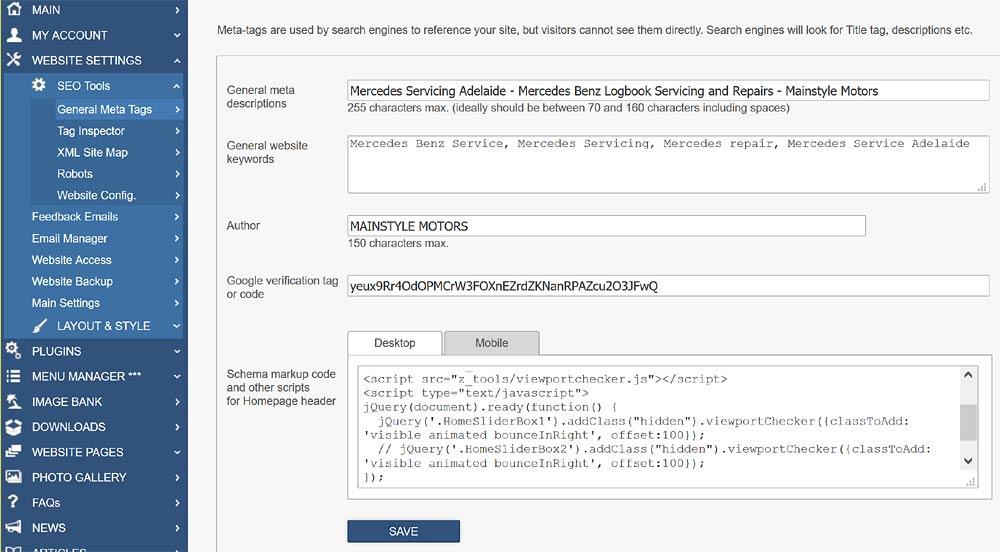
The General Meta Tags section allows you to set up meta tags for the landing page of your website.
Tag Inspector
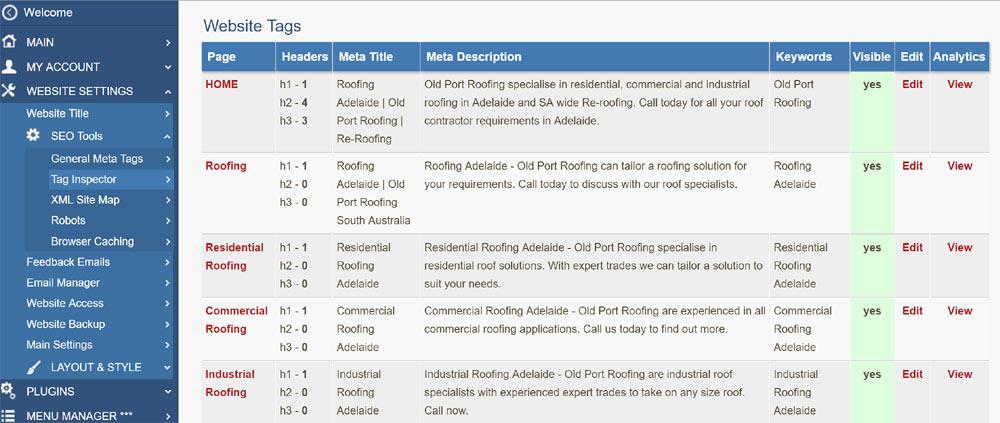
This tool allows you to view and edit meta tags for all pages on your website.
Online Duplicate content checker
Online Duplicate content checker
Find duplicate content, broken links, and more
CONTENT (step-by-step)
ACCOUNT SETTINGS
WEBSITE SETTINGS
Google Analytics and other Scripts
NAVIGATION
CONTENT
IMAGES
MEDIA
PLUGINS
Expandable / Collapsible Block
VIDEOS